Food Recovery
In the U.S., about 30% of food produced goes to waste. This includes waste in the field, to processing, during transportation, in the market, and waste by consumers. This food waste carries social, economic, and environmental challeges. The EPA has created the Food Recovery Hierarchy to help guide businesses and organizations in addressing food waste.
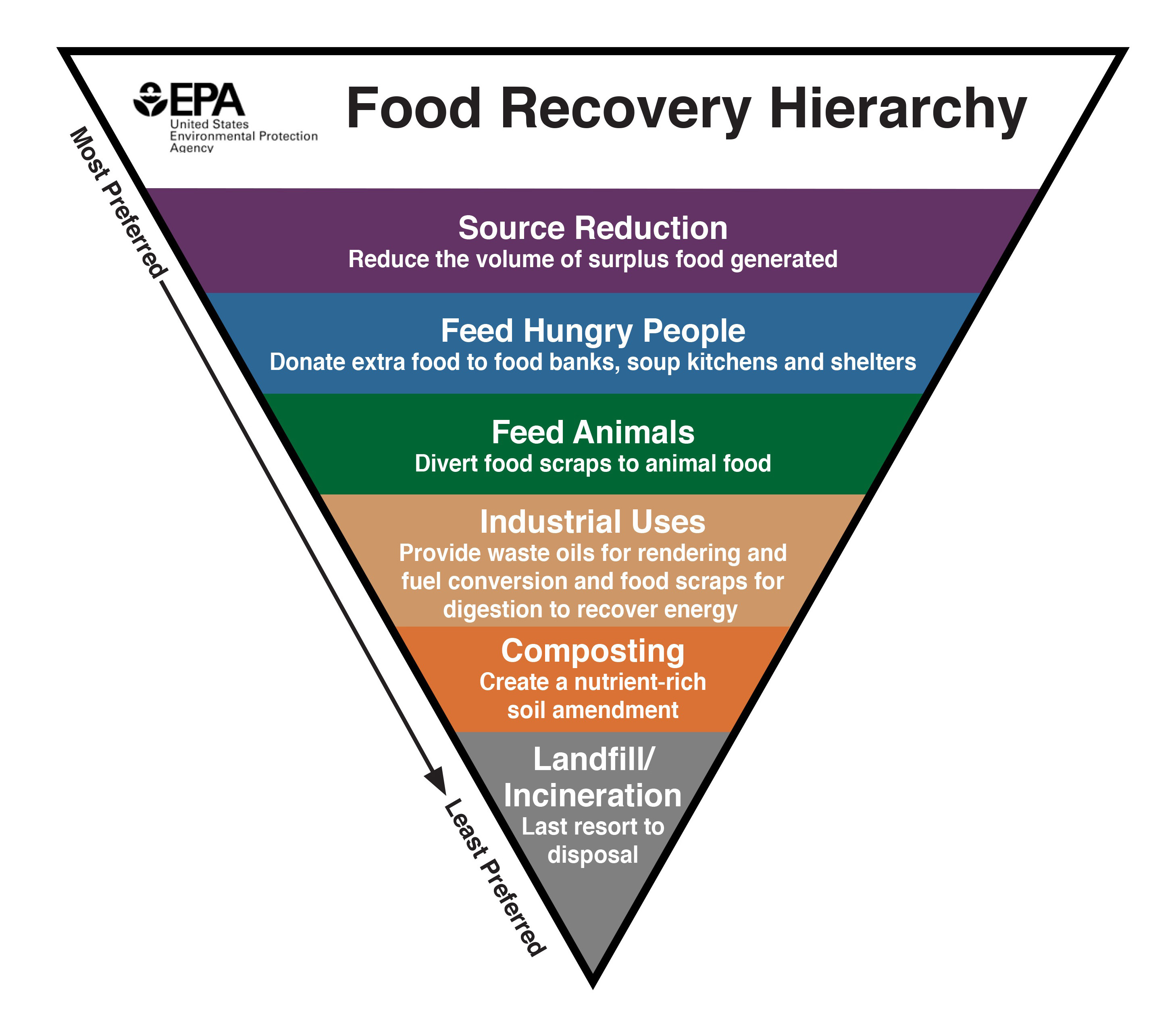
Every part of the food system can play a role in reducing food waste, from farmers to consumers. In some communities, food rescue organizations help to divert food that would otherwise be wasted, to organizations serving people in need of food.
K-State Pollution Prevention Institute Food Waste Resources
Pollution Prevention Institute Food Recovery Resources
EPA Sustainable Management of Food
Grocery and Food Retail Food Waste Resources (Wasted Food Action)
USDA Food Loss and Waste
K-State Food Waste Resources
Resource & Waste Recovery (NC State)
How can we save unsold, surplus food from being wasted? Food rescue and gleaning organizations coordinate the transfer of usable food to people and organizations in need. They often rely on volunteers for much of their work. Look for a local organization if you would like to get involved.
Community Food Rescue ChowMatch
Food Rescue US
Food Rescue Locator
Kansas Dept. of Health & Environment Composting Resources
K-State Composting Publications: Making, Process, Troubleshooting, Using (pdf)
Produce Safety Rule Compliant Composting (Iowa State)
US Composting Council
Vermicomposting Basics (ATTRA)